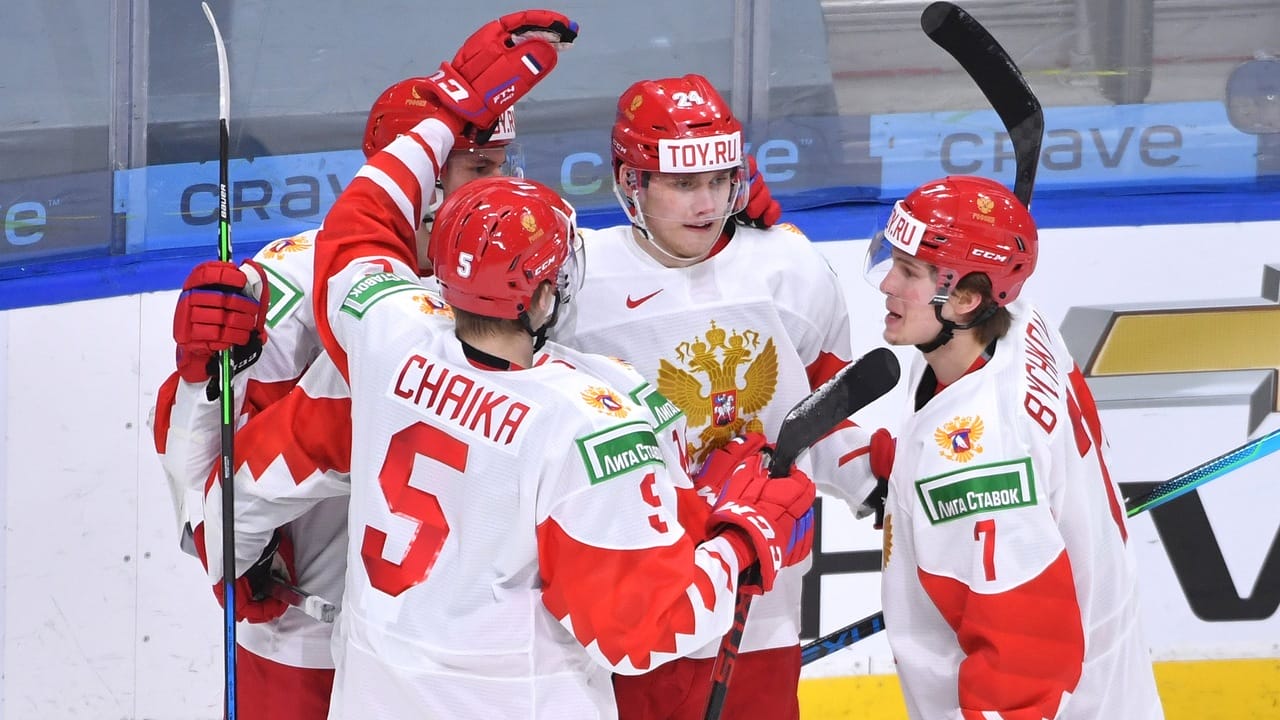
One country cannot play Russia. Not will not — cannot. Latvian law forbids its national teams from facing Russia or Belarus, and the federation has no intention of testing it.
Now look at the draw. At the world juniors opening in Edmonton and Red Deer on 26 December, and again at the men’s world championship in Germany in May, Latvia sits in the group Russia would most plausibly walk into. Two tournaments, the same collision.
“It is written in black and white in the law”
Roberts Plavejs, general secretary of the Latvian Ice Hockey Federation, told Latvian public broadcaster LSM that the rule is not open to interpretation. In team sports, he said, matches against Russia or Belarus are not permitted, and Latvia does not intend to break the law.
This is not a full boycott, and Plavejs was candid about why. “As a federation we do not have the option to refrain from taking part in championships,” he said. “That would create a great many risks, both economic and for the development of the sport.” Playing Russia, meanwhile, would put the federation’s state funding at risk.
Aleksandrs Samoilovs, who handles sport at Latvia’s Ministry of Education and Science, said the government is waiting on the IIHF and will work closely with the federation to make sure the law is not broken. He drew the distinction that matters here: in individual sports the decision sits with athletes and federations, but in team sports, he said, the regulation is very strict.
So Latvia intends to turn up, play its tournament, and not play one specific opponent. Nobody has yet explained how that works.
The world juniors: Russia’s likely seat is in Latvia’s group
The Court of Arbitration for Sport ruled on Friday that Russia must be let back in, citing insufficient evidence for the IIHF’s security concerns. The court did not say whether Russia must compete as a neutral team without national symbols, and it left what it called the organizational consequences to the federation.
Those consequences start in Alberta. The ten-team junior field is already set and split between two cities: Finland, Germany, Slovakia, Sweden and the United States in Red Deer, and Canada, Czechia, Latvia, Norway and Switzerland in Edmonton. Adding an eleventh team isn’t realistic, which means someone has to come out. Norway is the lowest-ranked side in the tournament, and the obvious candidate — and Norway is in Edmonton, in Latvia’s group.
The men’s Worlds: the same problem, with Ukraine in it
The senior tournament is worse, because the group in question already contains two nations with a stated objection.
The IIHF published the groups for Germany 2027 back in June.
| Group | City | Teams |
|---|---|---|
| Group A | Mannheim | Switzerland · Finland · Sweden · Germany · Latvia · Austria · Slovenia · Ukraine |
| Group B | Dusseldorf | Canada · United States · Czechia · Slovakia · Denmark · Norway · Kazakhstan · Hungary |
Sixteen teams have qualified, and the draw is made. Ukraine was the last team in, ending a 20-year absence, and is ranked lowest of the sixteen — which makes it the team a seventeenth entrant would displace, and the one federation nobody wants to be seen displacing. Ukraine’s own federation has said security concerns have only intensified since 2022.
It plays in Mannheim, in Latvia’s group, alongside Finland, whose federation has already told its players they are under no obligation to take the ice against Russia.
Latvia is the hard case, not the only one
The other federations have landed in different places. Germany’s Frank H. Lutz, whose association hosts the men’s event, said Russian participation would carry significant security, political and economic consequences for the host. Finland’s Heikki Hietanen said his federation understands and supports anyone who does not wish to take part. Sweden’s Anders Larsson said a boycott “is not on the table.” Hockey Canada says the implications are not yet clear and is talking to the IIHF.
Read more: