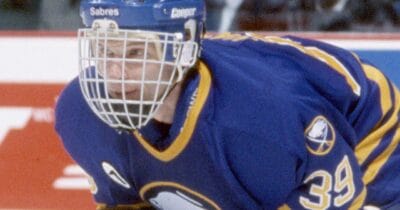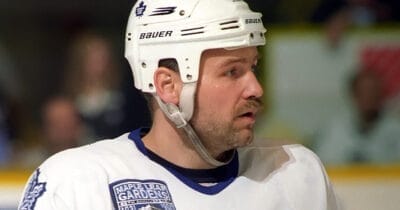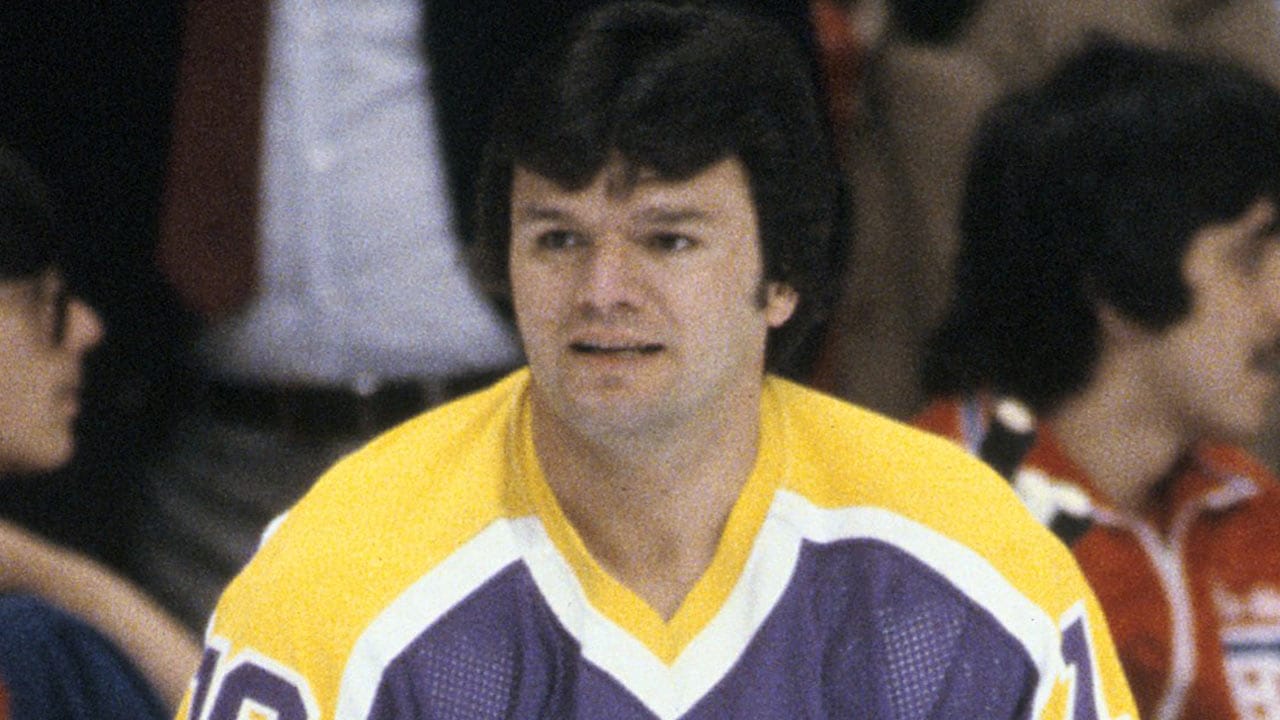
Marcel Dionne grew up in Drummondville, Quebec, and until the age of eight he had never played an organized game of hockey in his life. Everything he knew came from shinny and pickup games on whatever ice was available.
It had worked rather well. By the time he joined a proper league his skills were advanced enough that he could hold his own against boys as much as four years older than him.
There was one thing those pickup games had never included.
Nobody had ever drawn a red line or a blue line on the ice Dionne grew up playing on, and he had no concept of what either was for. He spent his first youth hockey games being blown dead for offside over and over again, a detail he would laugh about for the rest of his life, as recounted in Ted Mahovlich’s book Triple Crown: The Marcel Dionne Story.
A year later he was dominating that same league.
Marcel Dionne’s NHL career:
| Games | Goals | Assists | Points |
|---|---|---|---|
| 1,348 | 731 | 1,040 | 1,771 |
Did Marcel Dionne ever win the Stanley Cup?
Dionne spent almost his entire career with clubs that weren’t contending, four years in Detroit and eleven in Los Angeles at a time when hockey was barely visible on the west coast. He never got particularly close to one, which is why he is routinely described as the finest player never to lift it.
That obscurity cost him recognition as well as trophies. He won the Lady Byng twice and was named to only four postseason All-Star teams, though his fellow players twice voted him the league’s most outstanding performer.
The numbers hold up without any of it. Only Wayne Gretzky, Mark Messier, Jaromir Jagr, Gordie Howe and Ron Francis have scored more points, and only Gretzky, Howe, Jagr and Brett Hull have scored more goals. He had eight seasons of 100 points or more, five of them consecutive.
Two other Quebec boys came up alongside him. Gilbert Perreault was a year older, Guy Lafleur exactly the same age, and the three of them went at each other through youth hockey, junior and then the NHL. Montreal took Lafleur first overall in 1971 and Detroit took Dionne second.
Generously listed at 5-foot-9 and probably shorter, Dionne had a view on how a small man survived that era.
“You have to be fearless,” he told Mahovlich. “You put yourself in a position where you know you are going to get nailed. And to survive, you have to find tricks. You have to be quicker, more aggressive and you can’t give up.”
The Los Angeles Kings retired his No. 16 in 1990, and he entered the Hockey Hall of Fame in 1992. When the club finally won the Cup in 2014 they gave him a ring anyway, which he called the closing chapter of his hockey life.
Read more: