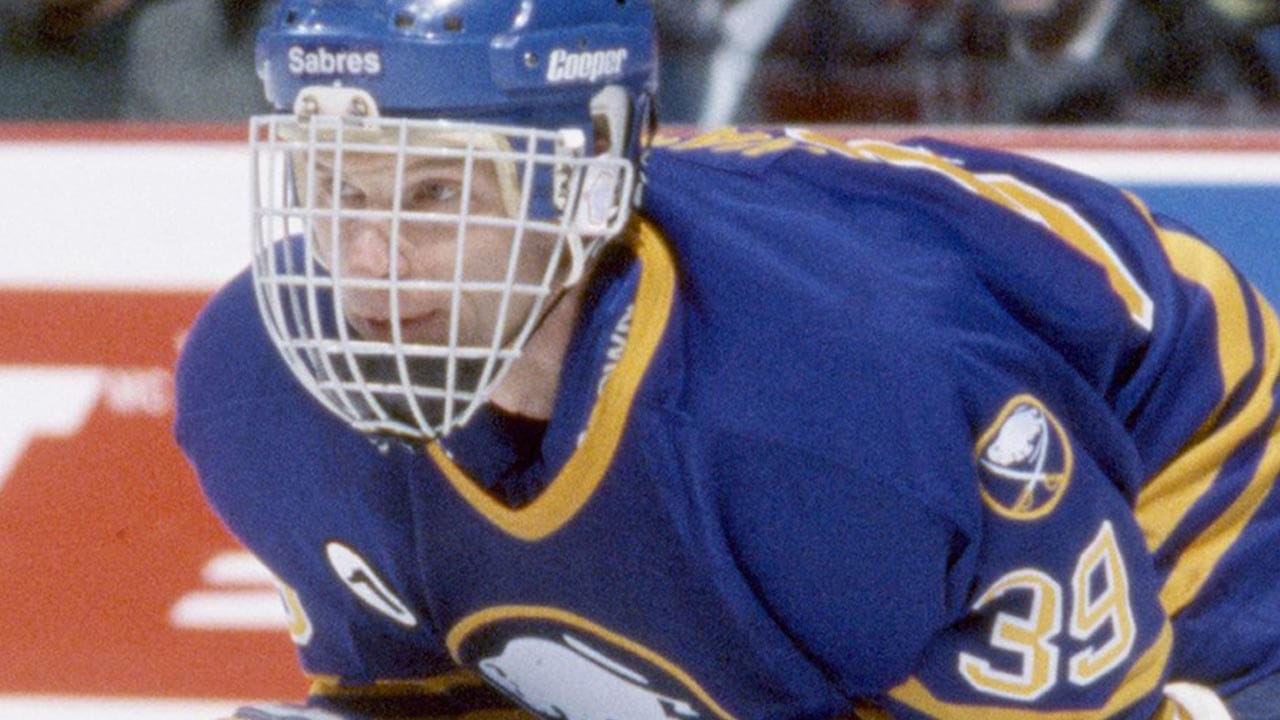
Dominik Hasek arrived in North America in 1990 expecting to be a starting goaltender. The Chicago Blackhawks already had Ed Belfour, who won the Vezina Trophy that season, and the club’s goalie coach was Vladislav Tretiak, one of Hasek’s own childhood heroes.
Tretiak had very little time for him.
“He was more like just only Eddie Belfour goalie coach because they were so close,” Hasek told Yahoo Sports. “He wasn’t working with me on an everyday basis.”
So Hasek spent two years shuttling between Chicago and the Indianapolis Ice of the IHL, with his unorthodox technique being picked apart by anybody who cared to comment. The consensus was that he looked like a fish out of water.
He has always said there was one thing working in his favor.
“Fortunately, I didn’t understand English at that time, so I had no idea what was written about me in the papers, what the coaches say,” Hasek said. “So I couldn’t listen too much to them.”
Dominik Hasek’s NHL career:
| Games | Wins | Vezina Trophies | Hart Trophies | Career save percentage |
|---|---|---|---|---|
| 735 | 389 | 6 | 2 | .922 |
Why did Chicago trade Dominik Hasek?
Belfour had just won the Vezina, and nobody in Chicago saw much reason to hold onto a 27-year-old backup whose technique they couldn’t make sense of. Hasek went to Buffalo, where he found a goalie coach in Mitch Korn who approached him completely differently.
“He knew that my style is not bad,” Hasek said. “He said you just need to work on some other things to get you better. I was lucky to get this goalie coach who never really tried to change my style.”
The numbers at that point gave nobody any reason to expect what followed. Hasek was 28 years old with 53 NHL games to his name and a career save percentage of .896.
He won the Vezina the next season, then led the entire league in save percentage for six consecutive years, posting between .920 and .937 while the league average sat between .895 and .908. He took back-to-back Hart Trophies in 1997 and 1998, the first goaltender to win the award since Jacques Plante in 1962 and still the only one to win it twice.
None of it came from coaching. Hasek went from the age of six to the age of 25 without a goalie coach of any kind, which is precisely why he arrived playing the way he did.
“Sometimes it was difficult to listen to people, like, my style is not good,” Hasek said. “But I’m glad I could prove that my style is good enough.”
Read more: