NHL clubs are carrying $44,237,000 in salary cap space for players who won’t play for them in 2026-27. That is 1.33% of the league’s total cap space, an average of $1,382,406 per club, and it is distributed very unevenly: fourteen teams carry none at all, and three carry more than 5% of their cap.
One charge has been running since 2015. Los Angeles terminated Mike Richards’ contract in June 2015, and the settlement runs through the 2031-32 season, by which point the Kings will have paid him for 16 years after his last NHL game.
Every NHL team’s dead money
Buyouts and retained salary in trades, for the 2026-27 season. Long-term injured reserve is excluded because an LTIR player is still on the club’s roster.
| Team | Dead money | Share of cap | Buyouts | Retained |
|---|---|---|---|---|
| Buffalo | $6,444,444 | 6.2% | $6,444,444 | None |
| Vancouver | $6,266,667 | 6.0% | $4,766,667 | $1,500,000 |
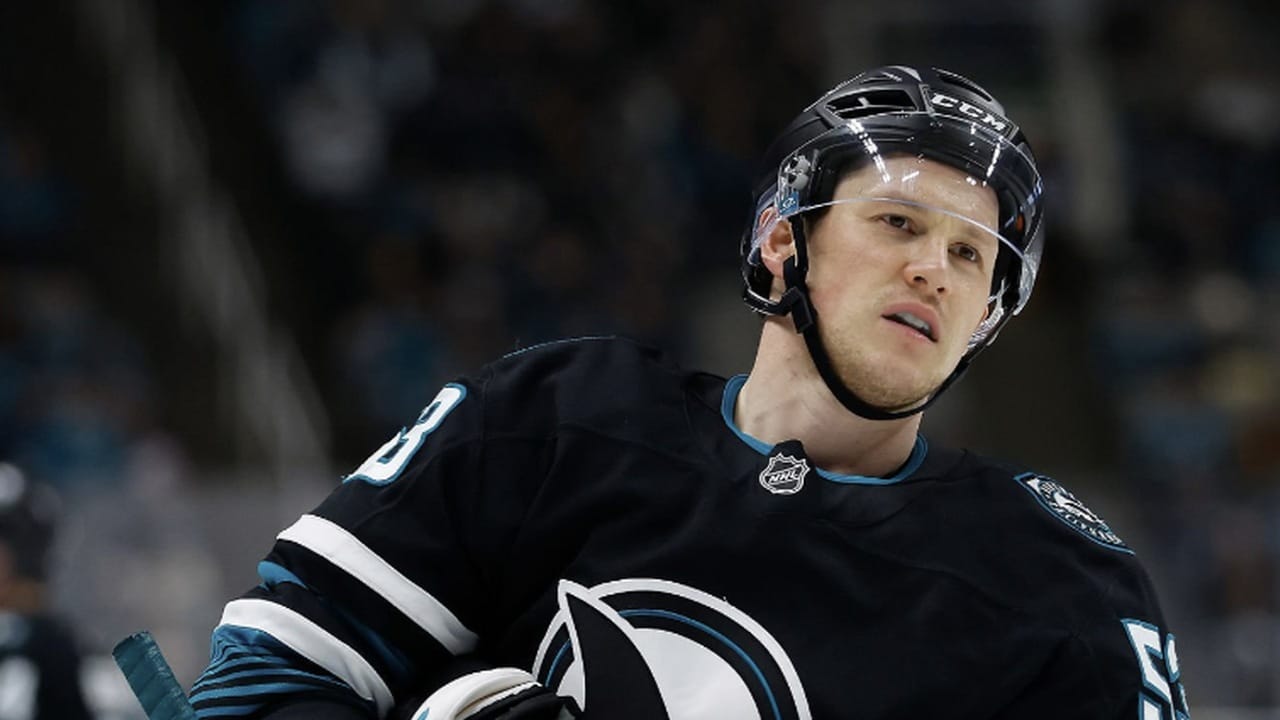
| San Jose | $5,720,834 | 5.5% | $2,833,334 | $2,887,500 |
| Calgary | $3,850,000 | 3.7% | None | $3,850,000 |
| Nashville | $3,555,556 | 3.4% | $3,555,556 | None |
| Montreal | $3,250,000 | 3.1% | None | $3,250,000 |
| Chicago | $2,758,333 | 2.7% | $258,333 | $2,500,000 |
| Edmonton | $2,600,000 | 2.5% | $2,600,000 | None |
| Ottawa | $1,875,000 | 1.8% | $875,000 | $1,000,000 |
| Minnesota | $1,666,666 | 1.6% | $1,666,666 | None |
| St. Louis | $1,333,333 | 1.3% | $1,333,333 | None |
| Philadelphia | $1,200,000 | 1.2% | None | $1,200,000 |
| Columbus | $972,000 | 0.9% | None | $972,000 |
| Utah | $650,000 | 0.6% | $650,000 | None |
| Boston | $615,000 | 0.6% | None | $615,000 |
| Los Angeles | $600,000 | 0.6% | None | None |
| Pittsburgh | $500,000 | 0.5% | None | $500,000 |
| Seattle | $379,167 | 0.4% | $379,167 | None |
| Anaheim | None | None | None | None |
| Carolina | None | None | None | None |
| Colorado | None | None | None | None |
| Dallas | None | None | None | None |
| Detroit | None | None | None | None |
| Florida | None | None | None | None |
| New Jersey | None | None | None | None |
| NY Islanders | None | None | None | None |
| NY Rangers | None | None | None | None |
| Tampa Bay | None | None | None | None |
| Toronto | None | None | None | None |
| Vegas | None | None | None | None |
| Winnipeg | None | None | None | None |
| Washington | None | None | None | None |
| League total | $44,237,000 | 1.33% | ||
What is dead money in the NHL?
Cap space charged to a club for a player who is not on its roster. It arrives three ways. A buyout ends a contract early and spreads a reduced charge over twice the remaining term, so a club can be paying for a player years after he has gone. Retained salary is the share a club keeps when it trades a player, up to 50% of the cap hit, which makes an expensive player easier to move. A terminated contract can also leave a negotiated settlement on the books. None of the three buys the club any hockey, which is why general managers treat all of it as a cost of past decisions.
READ MORE: Sidney Crosby’s points against every NHL team
Which NHL team has the most dead money?
Buffalo leads at $6,444,444, or 6.2% of its cap, and it comes from one player. Vancouver is second at $6,266,667 and San Jose third at $5,720,834. No other club exceeds 3.7%, so the problem is concentrated rather than general: three clubs account for $18.4 million of the league’s $44.2 million.
Fourteen clubs carry nothing at all: Anaheim, Carolina, Colorado, Dallas, Detroit, Florida, New Jersey, the New York Islanders, the New York Rangers, Tampa Bay, Toronto, Vegas, Winnipeg and Washington.
READ MORE: Connor McDavid’s points against every NHL team
Which player is the largest single charge?
Jeff Skinner, and Buffalo is paying for its own decision, not anybody else’s. The Sabres signed him to an eight-year contract worth $72 million in 2019 and bought out the final three years on 30 June 2024. A buyout is paid over twice the term remaining, so three years became six, and the charge runs through 2029-30. It stands at $6,444,444 for 2026-27, which is 15% of all the dead money in the league and the whole of Buffalo’s figure, and it falls sharply from 2027-28 onwards.
What happened to Skinner afterward shows how differently the two mechanisms work. He signed with Edmonton for 2024-25 and then with San Jose, and in February 2026 the Sharks placed him on unconditional waivers to terminate that contract. A termination of that kind leaves no cap charge behind at all, because the player forfeits the money he is owed rather than being paid it out over time. San Jose carries nothing for Skinner; its $5.7 million belongs to Martin Jones, Marc-Edouard Vlasic, Erik Karlsson and Tomas Hertl. One club bought him out and will pay until 2029-30. The other terminated him and owes nothing.
Skinner no longer plays in North America. He signed a one-year contract with EHC Biel-Bienne in the Swiss National League, which makes the largest dead-money charge in the NHL a charge for a player in Switzerland.
Second is Oliver Ekman-Larsson at $4,766,667 on Vancouver’s books, and his situation best explains how this works. Toronto pays his actual salary of $3.5 million, Vancouver pays the buyout, and Utah pays a further $650,000 from an older trade. Three clubs are paying $8,916,667 for one defenceman, and that arrangement runs to 2030-31.
Which charge runs longest?
Mike Richards’ settlement with Los Angeles, through 2031-32. The schedule is $600,000 a year through 2028-29, then $500,000 for two seasons, then $400,000 in the final year. The Kings terminated the contract in June 2015 and settled that October; Richards last played an NHL game in the 2015-16 season. The charge will outlive the contract it replaced by twelve seasons, because the original deal would have expired after 2019-20.
Oliver Ekman-Larsson’s buyout, through 2030-31, is the runner-up, and two clubs carry it at once.
READ MORE: Alex Ovechkin’s goals against every NHL team
Which players are being paid by teams they do not play for?
Eight players account for $9,958,333 of charges while no longer playing professional hockey anywhere: Jack Campbell in Edmonton, Kyle Turris in Nashville, Martin Jones and Marc-Edouard Vlasic in San Jose, Ryan Suter and Zach Parise in Minnesota, Mike Richards in Los Angeles and TJ Brodie in Chicago.
Minnesota is the cleanest example. Its entire dead-money figure is Zach Parise and Ryan Suter at $833,333 each, from the buyouts of the matching thirteen-year contracts both signed in 2012, and neither man plays hockey. Suter was elected to the United States Hockey Hall of Fame in the class of 2026 while the Wild were still paying him.
Three others are being paid by one club while playing for another. Matt Duchene plays for Dallas while Nashville pays $1,555,556 of his buyout. Colin White signed with New Jersey in July 2026 while Ottawa pays $875,000 of his. And Ekman-Larsson, as above, is on three payrolls at once.
Does any NHL team still carry a cap recapture penalty?
No, and 2026-27 is the first season in more than a decade with none anywhere in the league. The penalty was built to claw back an advantage from before the 2013 agreement, when clubs signed long, front-loaded contracts that paid a player far more cash in his early seasons than his flat cap hit suggested. A player who retired before the cheap back-end years were played left his club with cap relief it had never paid for, and the recapture charged the difference back to the club that signed the deal. Ilya Kovalchuk’s retirement is the textbook case and cost New Jersey roughly $250,000 a year.
It can only attach to contracts signed before September 2012, and the last of those expired after the 2025-26 season, so the mechanism is now extinct.
Where does this data come from?
Figures were compiled club by club from PuckPedia and cross-checked against CapWages.
Read more: